Waking Up Above the Lagoon: What to Expect From a Maldives Water Bungalow with a Private Pool
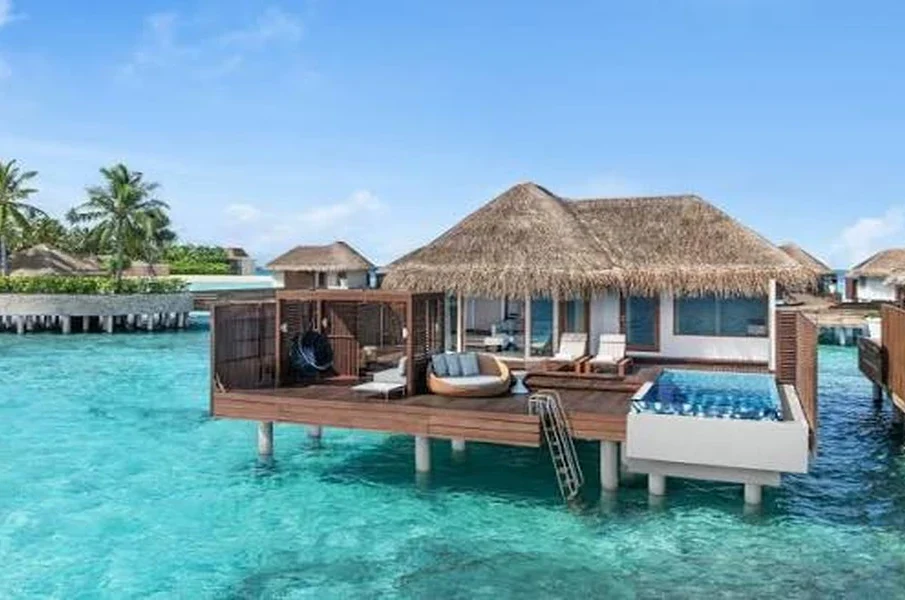
Few holiday images are as recognisable as a villa standing on stilts above clear turquoise water. For many travellers, staying in one is the main reason to visit the Maldives.
Before booking a Maldives water bungalow, most people want to know what daily life there actually looks like. What’s inside, how private is it, and is the private pool worth paying extra for? This guide walks through a typical stay from arrival to departure.
Getting There
Most international flights land at Velana International Airport near Malé. From there, resorts arrange transfers by speedboat or seaplane, depending on distance. Seaplanes usually fly only in daylight, so late arrivals may need an overnight stop near the airport.
Transfers are often charged separately. Check this when comparing rates.
Arriving at the Villa
Water villas sit along wooden jetties stretching out over the lagoon. A typical layout includes a bedroom with large windows facing the ocean, an indoor and sometimes outdoor bathroom, and a sun deck with loungers.
Many villas have steps leading straight down into the lagoon. Some include glass floor panels so you can watch fish below.
The Private Pool
A private pool adds a quiet space to swim without leaving your deck. It’s especially useful when the tide is low, the sea is choppy or you simply want fresh water instead of salt.
Couples often find it the most-used feature of the stay, particularly for early morning swims and sunset drinks.
A Typical Day
· Morning. Sunrise over the water is one of the quietest moments of the day. Many guests swim in the lagoon before breakfast.
· Midday. Snorkelling around the house reef, a visit to the beach or rest in the shade of the deck.
· Afternoon. Water sports, a short boat trip or time in the pool.
· Evening. Sunset from the deck, followed by dinner at one of the resort’s restaurants or in the villa.
Privacy and Space
Villas are spaced along the jetty to give each one some privacy. Decks often face Open Ocean, with partitions between neighbours. Some resorts also offer larger villas at the end of jetties for extra seclusion.
Booking a Maldives water bungalow with a pool usually means more space and fewer reasons to leave the villa.
When to Go
The Maldives has two main seasons. The dry season, roughly December to April, brings calmer seas and more sunshine. The wet season, roughly May to October, brings more rain and wind, but often lower prices. Rain usually comes in short bursts rather than all day.
Practical Tips
- Pack reef-safe sunscreen.
- Bring a waterproof phone case.
- Check if transfers and meals are included.
- Ask about snorkelling gear and house reef access.
- Book early for peak holiday periods.
Things Travellers Sometimes Overlook
Water villas can feel more exposed in strong wind. Light sleepers may notice waves under the deck. Families with young children should consider safety, since decks open directly onto deep water.
Walking distances along jetties can also be longer than expected, especially for villas at the far end.
Frequently Asked Questions
· Is a water villa better than a beach villa? It depends on your priorities. Water villas offer direct lagoon views. Beach villas give easier sand access.
· Can children stay in water villas? Many resorts allow it, but supervision is important.
· Are private pools heated? Usually not, though tropical temperatures keep them warm.
· What’s the best season to visit? December to April is generally the driest period.
A stay above the lagoon is memorable, but planning makes it smoother. Check what’s included, pick the right season and choose a villa that suits how you like to travel.





-
How Much Does a Private Morocco Tour Cost in 2027?
Introduction Planning for a trip to Morocco? Before booking, you need to ... -
-
-
-