An Evening in Gangnam, Seoul, South Korea: A First-Time Visitor’s Guide to Host Bars
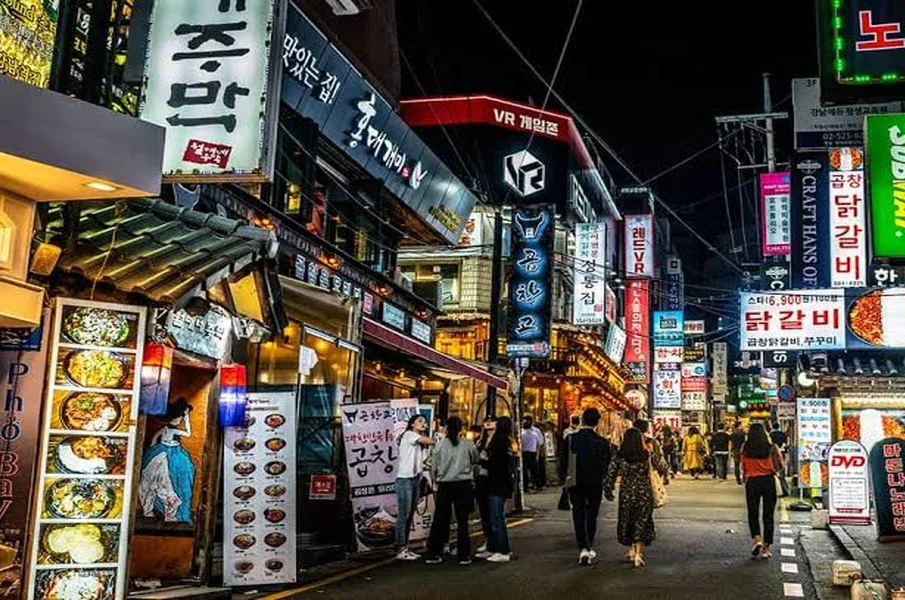
On a map, meeting friends “in Gangnam” sounds like a plan. On a Seoul street corner after dinner, with one person outside a subway exit and another looking for a sign several blocks away, it feels more like the beginning of a plan. Gangnam is a district of Seoul, the capital of South Korea. If an adult host bar is part of your evening here, three details are worth settling while everyone is still around the dinner table: which door you are heading for, what you are booking, and how you will get home.
What the invitation means
At a host bar, spending time in conversation with a host is part of the paid experience. That detail matters when somebody in the group suggests “going for a drink.” One friend may picture a counter where everyone orders separately. Another may be thinking of a table with a host who joins the conversation. A third may have heard the word karaoke and be expecting a singing room where friends entertain themselves. Before anyone makes a reservation, give each person a chance to say which evening actually appeals to them.
The host club format became popular in Japan before making its way to South Korea. Reporting by the Korean newspaper JoongAng Ilbo traces its arrival in Korea to the early 1990s. The borrowed name can make the experience sound familiar to someone who has traveled in Japan, but the name alone tells you little about how a particular Seoul venue handles seating, drinks or time. In Korean listings, 강남호빠 is a shorthand you may see for a host bar in Gangnam. Keep the Korean spelling handy when comparing a listing with a reservation message.
Company in a city of smaller households
Going home to an apartment of one’s own is a familiar experience for many women in South Korea. The country’s 2024 census counted roughly eight million one-person households, up from about 7.8 million a year earlier. In a separate 2025 survey summarized by Korea’s national statistics agency, 48.9 percent of people in one-person households said they often or sometimes felt lonely. That figure covers women and men together. It offers some context for the place of companionship in city life, though it tells us little about the woman sitting across the table or how she likes to spend a Friday night.
For a visitor, that distinction is worth carrying into conversation. A woman living alone might relish having the apartment to herself and still miss having someone to talk to over supper. A group of friends might be out celebrating a promotion. A traveler might simply be curious about a form of nightlife they have read about. You can ask what brought someone to Seoul or which neighborhood they like for dinner. Let them decide how much of their personal life they want to share.
Give the meeting place a front door
Choose a dinner spot before choosing a meeting point. Save the restaurant name in Korean and agree on a spot people can recognize from the pavement. “Inside the restaurant by the host stand” is easier to follow than “near the station,” especially if one friend arrives from the opposite direction. This also gives anyone who wants to join only for dinner a complete evening of their own. Nobody has to decide on the second stop while standing outside with a suitcase or searching for a Wi-Fi signal.
For the host bar itself, ask for the street address in Korean, the building name, the floor and a description of the entrance. Save the reply as a screenshot. If the map pin and the written directions seem to point to different doors, ask the person who took the booking to clarify. A photograph of the entrance can settle the matter faster than translating a string of messages about left and right. Share the same reply with everyone in the group so that a late arrival can find the table independently.
Ask for a price that fits your group
The most useful price question includes a head count and a length of time. Try writing, “There are three adults and we would like to stay for one hour. What would our group pay in total, in Korean won, and what would that include?” Then ask which choices would change the amount. Possible questions concern seating, a host’s time, drink orders and an extension of the visit. Ask for the answer in writing so everyone can read it before agreeing. For current contact information, use gangnamhostclub.com and confirm the arrangements directly for the date you have in mind.
A small change can matter more than the original quote. Imagine one friend decides over dinner to call it an early night. If the booking was priced for a table, the remaining two might split the same bill between them. If the price was per guest, the total might change. Both possibilities are easy to understand before arrival and awkward to sort out while someone is waiting for a payment. Send a quick update when the group size changes, and ask for the revised total.
Make room for an ordinary conversation
It helps to have something to talk about besides the booking. Bring up the dish you tried at dinner, the song you keep hearing around town or the view you saw walking across a bridge that afternoon. Those small details give the other person something concrete to respond to, even when you have only a little language in common. If you use a translation app, keep each sentence short and let the other person read the screen before adding another question.
Ask before taking a photograph, particularly if a table, a mirror or a doorway would bring someone else into the frame. The same courtesy applies to posting a photo afterward. If you would rather skip a drink, a song or a personal question, say so plainly. If your group is thinking of staying longer, pause long enough to check the extra cost and whether everyone wants another hour. Someone who is ready to leave should feel as welcome to say so as the friend who wants to stay.
Plan the last few blocks home
Check your route back to your accommodation before the evening starts. If you plan to take the subway, look up the last connection for your particular journey, including any transfer. For a taxi, save the hotel’s name and address in Korean. Friends staying at different hotels should each keep their own copy. Agree on a straightforward place to wait for a ride, such as the restaurant entrance you already recognize, and make sure the person booking the car knows where everyone is standing.
Before leaving the venue, take a minute to read the itemized bill together. Compare it with the arrangement you saved and any additions you agreed to during the evening. Once the practical details are settled, there is room for the part of travel that rarely makes it into a reservation message: a shared joke, a song someone finally remembers the name of, or the pleasure of walking back to the hotel with a friend and comparing notes on a corner of Seoul you have both just discovered.




-
An Evening in Gangnam, Seoul, South Korea: A First-Time Visitor’s Guide to Host Bars
On a map, meeting friends “in Gangnam” sounds like a plan. On ... -
-
-
-