5 flowering plants that attract honey bees every season
Why plant in relay?
A relay border is a simple idea. Line up flowers that take turns, each one coming into bloom as the last fades, and the result is that a bee always finds something open. Feed a colony like that, and it never hits a hungry patch, whereas a garden that peaks in June alone leaves them scrambling by October.
This is why gardeners who care about bees, Stephen Gleave Ancaster among them, plan around the whole season and not one showy month. Load a border with July colour and leave both ends bare, and the hive runs short in spring and autumn, which happens to be when it can least afford to. Every plant has to pull its weight, then. Open early or late, when rivals are scarce. Hand over nectar without hiding it. Put up with poor ground. That last point is why single blooms beat the ruffled doubles, whose crowded petals tuck the nectar away where no tongue reaches. And group them. Bees waste less energy over a tight patch than a scatter of ones and twos.
Which spring bloomers?
Two early plants carry a garden from thaw to the warm weeks, feeding colonies while barely anything else has woken.
- Crocus
Crocus goes first. It pushes colour up through cold ground while the rest of the bed still sleeps. Those little cups carry plenty of pollen, and hungry colonies pile onto them during the first warm patch, often before a single other flower has appeared.
- Borage
Borage picks things up as spring warms. Empty one of its blue star flowers, and it refills within minutes. Workers stick with it from dawn till dusk, and it seeds itself for years without you lifting a finger.
- Summer forage anchors
Peak season is when demand spikes, and two hardy plants take most of the weight through the long, hot days.
- Lavender
Few plants flower as long as lavender, and the whole thing hums for weeks. It wants sun and thin, hungry soil, nothing rich, and once the roots take hold, you can more or less forget the watering can. Cut it hard after the first flush and, more often than not, it flowers again.
- Sunflower
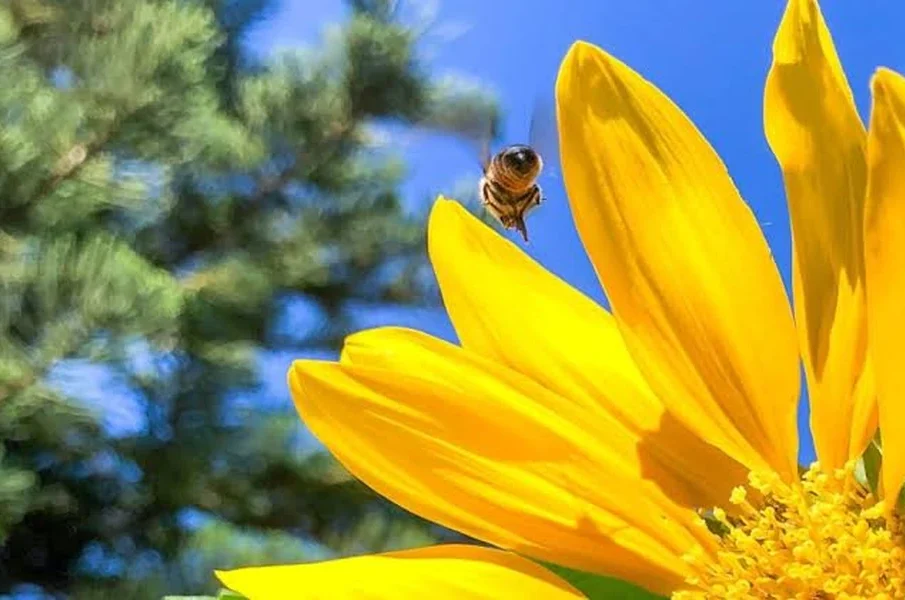
Go for the plain single-flowered sunflowers. Their wide faces sit at eye level like open plates, piled with pollen and nectar both. Drop a few seeds every fortnight or so, and there’s always a fresh head coming on as the tired ones fade out.
Late season rescue
Ivy closes the year off, and it saves colonies at the point where the cupboard has otherwise gone bare. Nobody plants ivy for its looks. The flowers are small, greenish, and dull. Yet they open in autumn, exactly when a hive is desperate to pack in winter stores.
Come a mild October day, bees cover mature ivy, snatching one final flush of nectar and pollen. Whether a colony winters fat or half starved can hinge on it. Give ivy a wall or an old trunk to scramble up, and a single plant flowers absurdly hard, patching a gap almost nothing else will.
So chain the five together, and bare ground becomes a pantry that never quite empties. Slot each to its own weeks, plant in fat clumps rather than lonely singles, and skip the doubles that bury their nectar. Manage that, and the bees come back month after month, from the first thaw to the last soft days of autumn.



-
Large Group Vacation Rentals That Work for Everyone
A group trip can fall apart over one missing detail: there are ... -
-
-
-